
Grease Cleaning Pros provides coast-to-coast service for food-service kitchens needing Grease Trap Repair plus continued maintenance. Our staff of fully licensed techs brings together data-driven monitoring and hands-on support. They take care of everything from standard cleanouts all the way to complex fixes as well as system installations.
Continue Reading About Grease Trap Pumping

Visit The Site Of Grease Trap Pumping

Check Out Grease Trap Cleaning
Effective management of fats, oils, and grease reduces the chance of plumbing breakdowns that can take offline your kitchen for days at a time. Grease Cleaning Pros delivers real-world upkeep , set up on a 30–90 day interval depending on volume. They also run eco-focused options for used cooking-oil pickup and recycling into biodiesel.
Our method is rooted in construction-industry and commercial plumbing best-practice standards. It satisfies municipal health & environmental regulations while reducing downtime. For owners wanting consistent performance and regulatory compliance, Grease Cleaning Pros delivers expert repairs, installs, and consulting. Which keeps kitchens running smoothly.
Why Grease Trap Repair Is Important For Commercial Kitchens
Consistent interceptor repair is essential to maintain your kitchen’s output. Trouble starts once fats, oils & grease rise above 25% of the trap’s volume. Quick action from trained teams ensures proper flow returns, preventing expensive downtime.
Keeping Operations Moving And Avoiding Costly Downtime
Clogged drains and sluggish sinks are signs of equipment failure. Ignoring these signals often results in temporary closures and costly fixes. Professional grease-trap cleaning services offer fast remedies, ensuring operations resume fast.
Regular maintenance helps prevent clogs and malfunctions. Routine cleanings and inspections minimize the chances of surprise failures, reducing emergency repair costs.
Staying Compliant With Local Health And Environmental Codes
Local regulations demand recorded cleaning schedules and correctly sized interceptors. Clear records from licensed technicians are critical for inspection readiness and compliance. Tracking grease/FOG levels supports kitchens stay within environmental standards.
Meeting maintenance standards minimizes exposure and protects a facility’s reputation. Professional servicing streamlines permit renewals and approvals and health inspections.
Environmental And Recycling Benefits
Reclaiming used cooking oil reduces pollution in waterways and reduces greenhouse gas emissions. It can be converted into biodiesel, animal feed, and household products.
Providers who offer grease interceptor repair and oil collection routes help kitchens lower waste output. They capture value while also hit sustainability targets, turning disposal costs into eco benefits.
| Common Risk | Likely Impact | Preventive Action |
|---|---|---|
| FOG buildup above 25% | System failure, sluggish drains, odors | Scheduled commercial grease trap maintenance plus monitoring |
| Missed cleaning records | Penalties, failed inspections | Documented kitchen grease trap maintenance performed by licensed technicians |
| Incorrect disposal of used oil | Environmental damage, regulatory action | Partner with grease trap cleaning services that offer oil recycling |
| Equipment damage or leaks | Costly repairs, downtime | Prompt grease interceptor repair and routine inspections |
Typical Problems That Require Grease Trap Repair
Grease traps often hide problems until they create a major mess. Catching issues early helps keep operations running smoothly and prevents expensive emergency repairs. Below, we explore typical indicators, mechanical issues, and the consequences of delaying repairs.
Failure Signs To Watch For
Continual foul odors by the trap or interceptor commonly point to grease buildup. Sewage-like smells indicate trapped solids and sludge and anaerobic breakdown.
Slow drains, multiple fixtures overflowing, or toilets gurgling while other lines run can suggest buildup deeper in the system. Repeat clogs that return after snaking indicate hardened grease further down the line.
Visible grease in the outlet of the interceptor, pooling water above the unit, and continually greasy kitchen floors despite cleaning are major red flags. These signs demand immediate grease trap repairs.
Structural And Mechanical Problems
Worn lids or rusted covers and damaged baffles hurt the separation process. Traps that are the wrong size or were installed poorly let oils to pass through into the sewer line.
Collected solids and solidified grease often forms clogs in pipes downstream. Removing years of buildup sometimes requires high-pressure hydro-jetting at approximately 4,000 PSI to bring flow back.
Licensed technicians assess system damage and recommend targeted fixes. Working with trusted grease trap specialists makes sure repairs follow local codes and keep kitchen operations protected.
What Happens When Repairs Are Delayed
Allowing issues to continue can turn into mainline blockages and sewer back-ups. Forced closures for repairs damage revenue and throw off staff schedules.
Enforcement penalties and reputational damage often follow incidents when a facility violates health or environmental rules. Service becomes more complicated and costly as FOG hardens and pushes through piping.
Regular grease trap cleaning services plus prompt grease trap repair minimize the need for high-cost emergency calls. Putting money into planned maintenance with licensed technicians cuts downtime and limits large plumbing campaigns.
| Problem | Typical Sign | Typical Fix |
|---|---|---|
| Odors and sink odors | Persistent sewer/rotten odor near the trap | Pump out, deep clean, odor neutralization by licensed grease trap technicians |
| Slow draining and backups | Multiple drains slow or gurgling toilets | Hydro jetting and pipe descaling, followed by scheduled grease trap cleaning services |
| Visible grease at the outlet | Floating grease and pooling water above the interceptor | Separator tune-up and baffle repair or replacement by reliable grease trap specialists |
| Structural damage | Rusted lids, broken or missing baffles | Parts replacement, reseating, or a system upgrade completed by licensed grease trap technicians |
| Advanced pipeline buildup | Recurring clogs after snaking plus hardened grease downstream | High-pressure hydro jetting and longer-term maintenance plan from grease trap repair professionals |
Grease Trap Repair Process
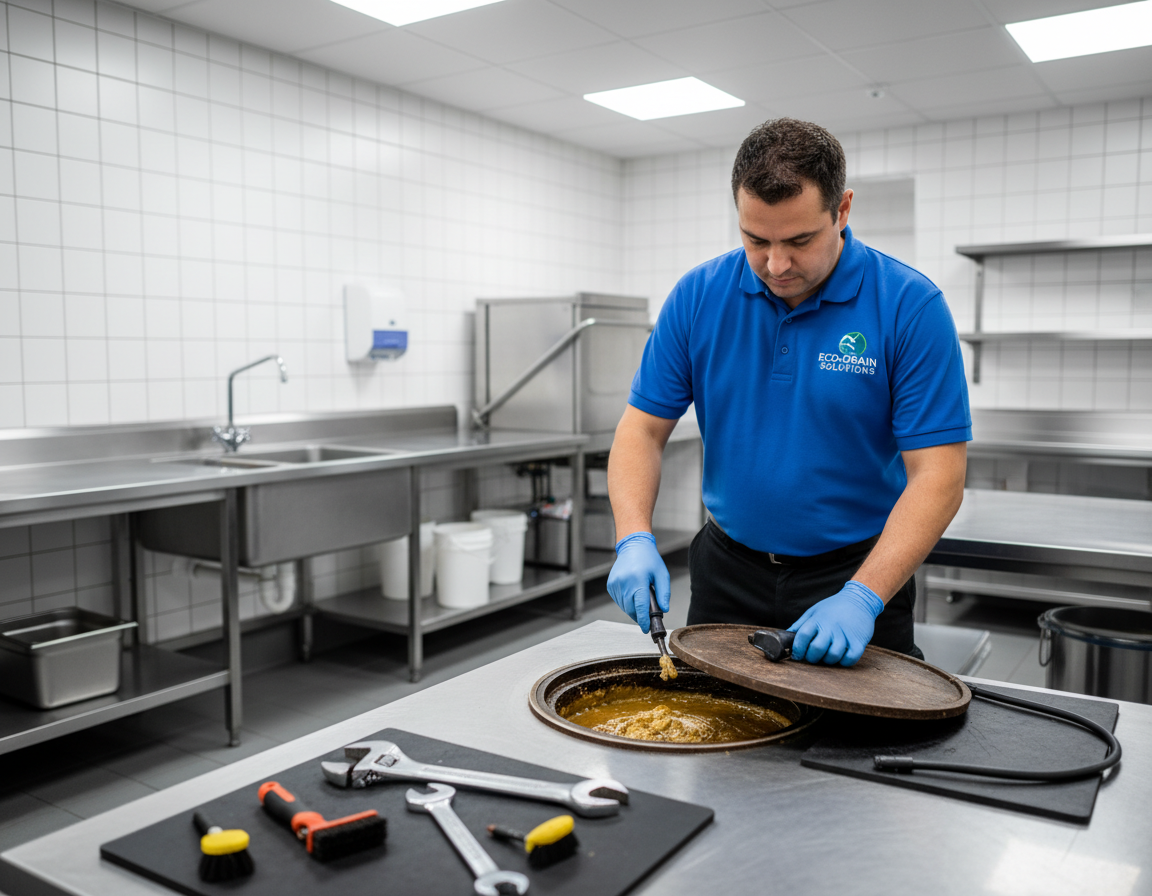
Effective grease trap repair work starts with a thorough assessment. Technicians first visually check the lids, baffles, and piping. They measure FOG levels and inspect downstream lines for accumulated buildup. Precision monitoring tracks grease accumulation, ensuring service is timely.
Testing and diagnostics identify the root causes, like a sizing mismatch or physical damage. This clarity guides whether a focused repair or a larger intervention makes sense. Licensed professionals record results with photos and reports for owners and inspectors.
Repair methods and best practices
Typical repairs can include pumping out and cleaning, changing damaged parts, and welding or sealing corroded sections. Hydro-jetting is often used to break up hardened grease inside pipes. Each method is designed to restore flow and performance.
Best practices typically include complying with local codes and maintaining detailed records. Scheduling repairs outside peak hours keeps disruption minimal. Bundling repairs with preventive cleaning plus monitoring reduces repeat call-backs. Using licensed technicians supports compliance with standards and helps protect health permits.
When replacement or professional installation is needed
Replacement required for serious structural damage, such as heavy corrosion or failed baffles. It may also be required if a unit is undersized or when repeated fixes don’t hold. In these cases, grease interceptor repair may not be enough.
Proper professional installation helps ensure correct sizing and placement. Smaller kitchens often need 20 to 50 gallon traps, while high-volume kitchens typically require 500–5,000 gallon interceptors. Bringing in experienced teams to install minimizes future issues and supports compliance.
| Concern | Standard Repair | When Replacement Is Recommended |
|---|---|---|
| Blocked outlet or pipe buildup | Targeted cleaning plus hydro jetting | Repeated clogs from downstream buildup despite cleaning |
| Broken baffles or rusted baffles | Baffle replacement, welding seals | Widespread structural corrosion that affects separation |
| Lid or seal damage | Seal replacement and lid repair | Cracked sumps that compromise integrity |
| Undersized unit for kitchen volume | Short-term maintenance and monitoring | Upgrade to larger interceptor with professional installation |
| Continual FOG accumulation | More frequent cleaning and monitoring systems | Switch to a properly sized grease interceptor |
Owners should weigh long-term reliability when choosing between repairs and upgrades. For multi-faceted locations, requesting both repair and installation quotes is smart. Certified teams provide end-to-end interceptor management and ongoing service plans for smooth operations.
Maintenance, Cleaning, And Preventive Services Provided By Grease Cleaning Pros
Regular maintenance is essential for keeping kitchens efficient and reducing costly backups. Grease Cleaning Pros creates maintenance plans that align with the specific needs of each site. These programs help operators stay aligned with local regulations, lower odor issues, and avoid emergency calls.
Regular Cleaning Schedules And Custom Maintenance Plans
The suggested frequency for pump-outs varies between 30–90 days, according to kitchen volume. High-volume fry operations typically require monthly servicing, while smaller cafés may only need service quarterly.
Grease Cleaning Pros assesses FOG output levels, reviews kitchen volume levels, and references city codes to design tailored schedules. Each plan covers routine pump-outs, inspection reporting, compliance documentation, and emergency response availability.
Advanced Cleaning Techniques And Equipment
Service technicians use vacuum/pump trucks, plus hydro jetting up to 4,000 PSI, to remove pipe walls and trap internals. These approaches allow for service during operating hours with minimal interruption.
Digital tracking and monitoring systems record FOG levels and trends and service history details. This visibility reduces overfilling, prolongs component life, and maintains reliable day-to-day operations.
Additional Services: Used Oil Collection And Sustainability Programs
Used cooking-oil collection moves oil into biodiesel and other reuse pathways. Clients can receive rebates or revenue from oil that’s headed for recycling.
Eco programs center on environmentally friendly disposal, reduced greenhouse gas emissions, and best practices to limit FOG at the source level. These efforts pair well with cost-effective grease trap solutions and regular maintenance to cut long-term costs.
| Service Option | Typical Frequency | Main Benefits | Best for |
|---|---|---|---|
| Planned Pump-Outs | 30–90 days | Prevents backups, meets regulations | Restaurants, cafeterias |
| Hydro Jetting & Vacuuming | As needed or during scheduled service | Removes buildup and restores flow | High-volume kitchens |
| Digital FOG Monitoring | Continuous monitoring or periodic checks | Predictive upkeep, compliance logging | Operators with multiple sites |
| Used Cooking Oil Collection | Weekly through monthly | Recycling revenue and lower emissions | Any facility producing cooking oil |
| Customized Maintenance Plans | Ongoing | Custom schedule and emergency support | Businesses looking for affordable grease trap solutions |
Pairing grease trap cleaning services with a planned maintenance schedule lowers downtime and keeps kitchens compliant. Consistent attention to commercial and kitchen grease trap maintenance protects key equipment and supports sustainable operations.
Choosing Reliable Grease Trap Specialists And Affordable Solutions
Choosing the right team streamlines ongoing upkeep and emergency response. Look for providers with solid credentials and real-world experience in food-service systems and large interceptors. This combination makes sure prompt, compliant service when time is critical.
Key Things To Look For In A Service Provider
Confirm the service company is licensed, insured, and qualified before scheduling work. Licensed technicians support compliance with local health and environmental regulations. Obtain service logs that highlight regular monitoring, hydro-jetting, and modern equipment usage.
Verify coverage for after-hours and emergency support. A service provider with clear communication and custom consultations keeps downtime low and protects opening schedules.
Cost-Saving Strategies And High-Value Options
Proactive maintenance significantly reduces emergency costs. Regular pump-outs and monitored schedules lower the chance of mainline blockages and costly shutdowns. Bundled programs for repair, cleaning, and oil collection are often more cost-effective than one-off calls.
Recycling used cooking oil can help offset service charges. Work with teams that show savings and offer clear billing to monitor ROI.
Case Examples And Documented Results
Quick resolutions for critical issues make sure sites stay open on schedule. Documentation detail timely clearing of backups and on-time interceptor replacements, protecting day-to-day operations during openings and health checks.
Infinity Group Construction highlights significant gains from proactive interceptor management. Grease Cleaning Pros deploys precision monitoring systems, professional grease trap installation, hydro-jetting, and used-oil recycling. They provide cost-effective solutions with proven results.
Final Thoughts
Effective Grease Trap Repair and regular cleaning services are vital for food-service kitchens. They prevent fines and forced shutdowns. Precise diagnostics, prompt fixes, and correct sizing are key. High-level cleaning methods including hydro jetting also serve a vital role.
Following a 30–90 day service schedule according to your kitchen volume matters. That helps prevent clogs and costly downtime. This keeps smooth operations.
Grease Cleaning Pros offers complete support, from inspection and repair to installation plus hydro jetting. They also provide precision monitoring and used cooking oil collection. Their method advances sustainability by recycling oil into biodiesel, cutting GHG emissions.
Choosing licensed, reliable grease trap specialists is a smart move. They provide service history documentation and compliance support. Package programs and up-front pricing make grease trap solutions affordable. This safeguards day-to-day operations, the environment, and your bottom line.